
Episode 782
Aboard the Space Station: Loud, Weightless, Remarkable
Why watch: Episode 782 takes viewers aboard the International Space Station through three NASA productions — and one astronaut ties them together.
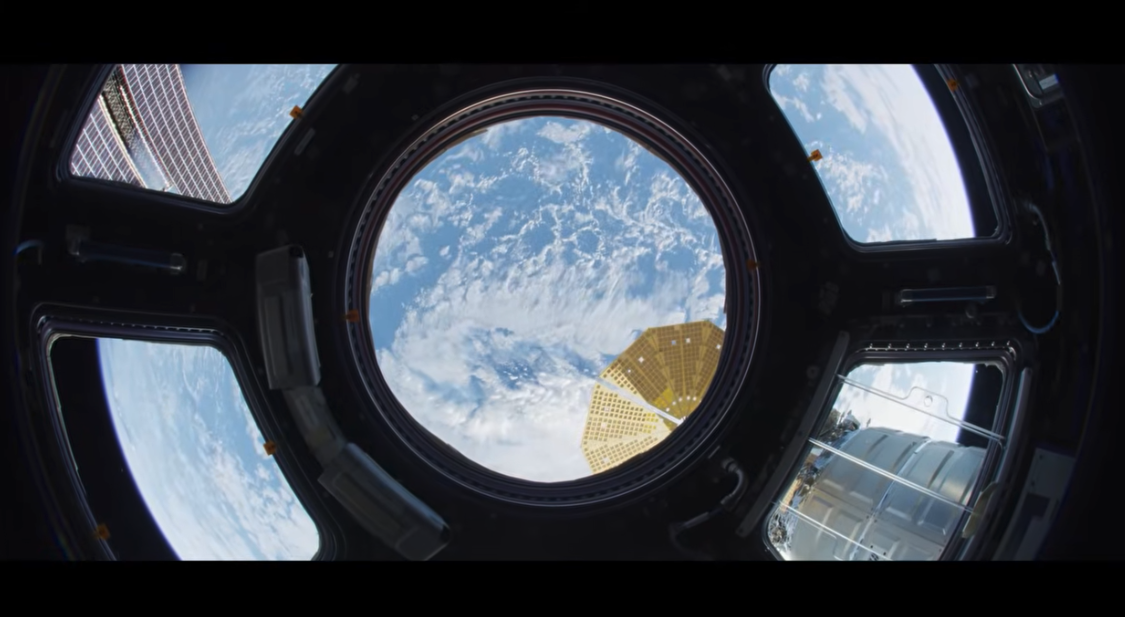
Episode 782 takes viewers aboard the International Space Station through three NASA productions — and one astronaut ties them together. Meet Suni Williams, Pilot of NASA's Boeing Crew Flight Test introduces Sunita Williams as she prepared for the first crewed flight of Boeing's Starliner spacecraft. International Space Station: Humanity's Lab in Space, narrated by Adam Savage, surveys the station as a powerhouse of cutting-edge science and international cooperation. And in Departing Space Station Commander Provides Tour of Orbital Laboratory, it is Williams herself — filmed in 2012, just hours before she left the station at the end of Expedition 33 — who walks viewers through the modules of the orbiting laboratory she commanded. For viewers, it is a rare first-person look at living and working in space. For schools, science centers, museums, broadcasters, sponsors, and funders, it shows AATV bringing NASA's own storytelling — and one of America's most accomplished astronauts — to a broadcast devoted to accessibility.
In this program
- Meet Suni Williams, Pilot of NASA’s Boeing Crew Flight Test
- International Space Station Humanity’s Lab in Space (Narrated by Adam Savage)
- Departing Space Station Commander Provides Tour of Orbital Laboratory
Sound Tips™ Companion
Life in space is loud — and astronauts can't walk away from it. The International Space Station hums with ventilation fans, pumps, and machinery around the clock; measured background levels inside its modules run about 56 to 69 decibels, and crews live with that sound every hour of every day for missions lasting six months or more, because the life-support systems that keep them breathing never shut off. Close quarters make it worse — there is no quiet room, and NASA reports that since 2008 more than a third of crew noise measurements have exceeded the agency's strict flight-rule limits. NASA fights back: every piece of equipment is acoustically tested before it flies, quiet fans and sound-absorbing barriers dampen the noisiest hardware, alarms must stand out at least 20 decibels above the cabin noise, crew members wear acoustic monitors to track their daily exposure, and they even take hearing tests aboard the station. Weightlessness adds a quieter challenge: without gravity pulling body fluids toward the legs, blood and fluid shift toward the head, and NASA studies have found low-frequency hearing shifts of up to 10 decibels in some crew members — possibly linked to pressure changes in the inner ear. On the ground, the same physics applies: sound at or above 85 decibels — about the level of heavy city traffic — can damage hearing with long or repeated exposure, and noise-induced hearing loss is permanent but almost entirely preventable. The World Health Organization estimates more than a billion young people worldwide risk hearing damage from unsafe listening, especially through earbuds and headphones. A few habits protect your hearing for a lifetime: keep personal audio at no more than 60 percent of maximum volume for no more than 60 minutes at a time, move away from loud sound sources when you can, and carry earplugs for concerts, power tools, and loud events. If you notice ringing in your ears or trouble following conversation in a noisy room, treat it as an early warning and ask for a hearing check — the same vigilance NASA applies 250 miles above the Earth works just as well in your living room.
- Source: NASA: Meet the NASA Boeing Crew Flight Test Astronauts
- Source: NASA: International Space Station — Humanity's Lab in Space (Adam Savage)
- Source: NASA: Departing Space Station Commander Provides Tour of Orbital Laboratory
- Source: NASA NTRS: International Space Station Acoustics — Status Report
- Source: NASA NTRS: ISS Acoustics (ICES 2024)
- Source: NASA NTRS: Inter-Noise 2021 — Long-Term ISS Acoustic Monitoring
- Source: PubMed: On-Orbit Hearing Assessment of ISS Crew Members
- Source: NIDCD: Noise-Induced Hearing Loss
- Source: WHO: Deafness and Hearing Loss
Watch American Abilities: Sundays 10 AM ET · CW-WHAM Spectrum 16/1212 · WHAMDT2 (CW) 13.2 On the Air · DirecTV Ch. 14